
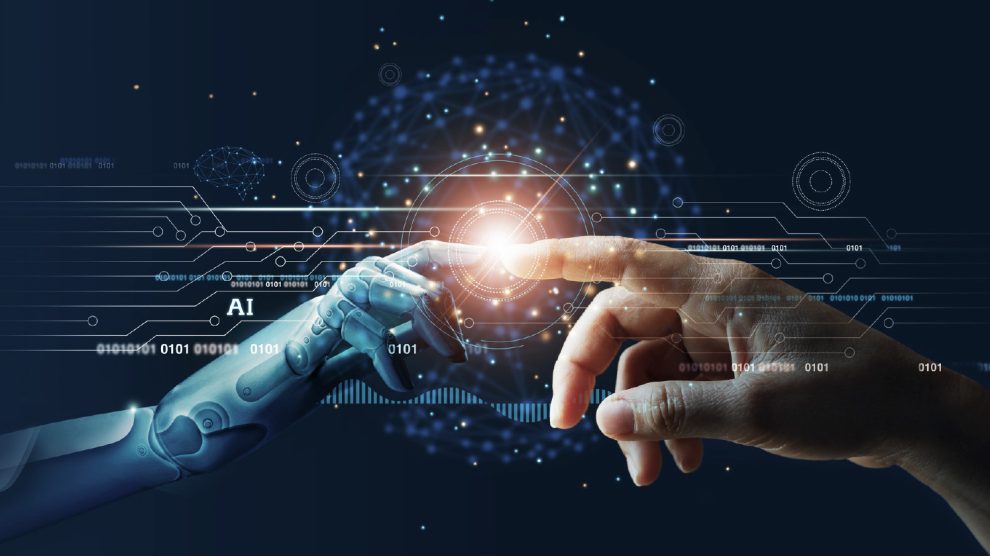

Applications have evolved far beyond their origins as digital tools. In today’s hyper-connected ecosystem, they’ve become intelligent infrastructures—self-learning, self-optimizing entities that mediate human behavior, data flows, and business logic across industries.
The future of applications isn’t defined by functionality; it’s defined by cognition, adaptability, and systemic integration. Advanced organizations now treat applications not as standalone systems but as strategic intelligence frameworks capable of sensing, reasoning, and evolving.
This shift marks the beginning of a new era—the rise of the Cognitive Application Economy, where software becomes an organism rather than an object.
From Code to Cognition: The Application’s Evolutionary Leap
For decades, application development followed a simple paradigm—define features, write code, deploy, and maintain. Today, that paradigm is obsolete. The acceleration of AI, edge computing, and multi-cloud ecosystems has turned applications into living systems that adapt dynamically to context and user intent.
A cognitive application possesses three defining characteristics:
-
Perceptive Intelligence: It understands environmental signals—user behavior, network conditions, emotional tone, and contextual variables.
-
Adaptive Logic: It rewrites its own workflows through machine learning feedback loops.
-
Collaborative Cognition: It connects and co-evolves with other applications through API ecosystems and shared data models.
These applications don’t just execute—they interpret. They can shift interfaces, reconfigure architectures, and optimize resource allocation in real time, making them functionally closer to autonomous organisms than static codebases.
The Decentralized Application Framework: Intelligence Without Borders
Traditional applications were centralized—housed on servers, controlled by vendors, and limited by geographic or architectural constraints. The rise of decentralized frameworks has dismantled these limitations.
In the decentralized model, applications run across distributed networks, edge nodes, and blockchain layers, removing dependency on a single control point. This architecture offers three transformational advantages:
-
Resilience: Distributed systems eliminate single points of failure, increasing operational uptime and reliability.
-
Autonomy: Smart contracts and self-governing nodes allow applications to function without constant human oversight.
-
Transparency: Blockchain-based verification ensures integrity across interactions, transactions, and data exchanges.
This decentralization transforms applications into sovereign systems—capable of managing identity, value, and logic independently of traditional infrastructure. The next phase of software evolution is not cloud-first; it’s network-native, where intelligence is fluid, mobile, and borderless.
Intent-Driven Applications: From User Input to Predictive Action
The defining edge of modern applications lies in intent recognition—the ability to understand what a user means rather than what they say.
Natural language interfaces, behavioral analytics, and AI-powered context models enable applications to infer user goals with minimal input. The result is intent-driven interaction, where the app anticipates needs, reduces friction, and executes preemptively.
For example:
-
Enterprise resource apps optimize workflows based on employee behavior patterns.
-
Healthcare applications predict patient needs through wearable and sensor data.
-
Financial apps adjust investment portfolios dynamically using predictive sentiment models.
In this new paradigm, interaction becomes conversation, and the boundary between user and software dissolves. Applications cease to be passive interfaces—they become active collaborators in decision-making.
Application Symbiosis: Ecosystem Interoperability as Competitive Edge
As industries converge, applications no longer compete in isolation—they operate as parts of symbiotic ecosystems. The ability of an app to integrate, exchange, and evolve within a network now determines its value.
The most advanced organizations design applications as ecosystem-native entities, structured around interoperability and co-creation. Key enablers of this shift include:
-
Open API Architectures: Encouraging modular integrations and data exchange.
-
Federated Machine Learning: Enabling shared intelligence without compromising privacy.
-
Composability: Allowing functionalities to be dynamically assembled across multiple applications.
This symbiotic structure turns applications into ecosystem citizens, each contributing to a collective intelligence greater than the sum of its parts.
Data as a Nervous System: Real-Time Intelligence in Application Design
Modern applications are no longer static repositories of data—they are neural systems that process information in real time. The data layer is now the nervous system of the application, constantly transmitting signals between users, environments, and decision engines.
The power of such applications lies not in storage but in streaming analytics—continuous interpretation of data flows to enable instant decisions. This architecture introduces several key advancements:
-
Contextual Processing: Applications react based on environmental variables like location, device, and mood.
-
Predictive Adjustment: Machine learning continuously optimizes functions based on live data.
-
Feedback Loops: Each user interaction enhances system intelligence for future interactions.
In essence, data transforms the application from a tool into an adaptive organism that grows smarter with every engagement.
Security by Design: Cognitive Defense Mechanisms
As applications become more intelligent, so do their adversaries. The complexity of modern architectures requires autonomous security systems that evolve at the same pace as attacks.
This has given rise to Cognitive Security, where protection mechanisms are embedded directly into the application’s intelligence framework. Unlike traditional reactive models, cognitive defense uses AI to detect, predict, and neutralize threats before they manifest.
Advanced cognitive security involves:
-
Behavioral Anomaly Detection: Identifying deviations in user or system behavior patterns.
-
Self-Healing Protocols: Enabling automatic isolation and repair of compromised modules.
-
Adaptive Encryption: Dynamically altering cryptographic layers in response to threat evolution.
This proactive security paradigm ensures that applications remain trustworthy, resilient, and self-defending, even in decentralized or multi-cloud environments.
The Economic Reconfiguration: Applications as Capital Assets
The financial perception of applications has also evolved. Once considered cost centers or software tools, advanced applications are now treated as capital assets—autonomous entities capable of generating, managing, and reinvesting value.
In sectors like fintech, logistics, and digital media, cognitive applications are becoming profit engines—optimizing operations, executing trades, managing inventory, or personalizing content autonomously.
This creates a new class of digital asset: the productive application, one that contributes directly to EBITDA growth by continuously refining its efficiency and outcomes.
In the Intelligence Economy, software ownership translates directly to equity power. Those who own adaptive applications control not just digital infrastructure—but the strategic intelligence layer of commerce itself.
The Human Factor: Designing Ethical Cognition
As applications grow more autonomous, ethical design becomes a strategic imperative. The decisions made by intelligent systems affect user rights, data privacy, and even social equity.
Ethical cognition in application design involves:
-
Embedding value alignment between user goals and system behavior.
-
Ensuring algorithmic transparency in decision-making processes.
-
Designing for human augmentation, not replacement.
Applications that prioritize ethical coherence will sustain long-term trust and user retention. In a market where intelligence is ubiquitous, ethics becomes the differentiator.
The Next Frontier: Cognitive Applications as Global Infrastructure
The future of applications will blur the line between technology and infrastructure. Just as the internet became the foundation of communication, cognitive applications will become the foundation of intelligence distribution.
Cities, enterprises, and governments will operate on application ecosystems that interconnect economies, services, and citizens in real time. Every domain—from logistics to governance—will rely on these intelligent layers to synchronize value creation.
In this future, applications are not built—they emerge. They evolve through collective data, shared intelligence, and human collaboration, marking the next great phase in digital civilization.
FAQs
1. What distinguishes cognitive applications from traditional ones?
Cognitive applications possess adaptive intelligence—they perceive, learn, and optimize continuously, unlike static apps that depend on predefined logic.
2. How do decentralized applications contribute to resilience?
By distributing functionality across multiple nodes, they eliminate single points of failure and enhance operational autonomy.
3. Why is intent-driven design crucial for modern applications?
It allows systems to interpret user goals contextually, reducing friction and enabling predictive execution instead of reactive response.
4. What role does data play in the evolution of applications?
Data acts as the nervous system, feeding continuous intelligence loops that enable real-time decision-making and personalization.
5. How do cognitive applications handle cybersecurity threats?
Through AI-powered anomaly detection, adaptive encryption, and self-healing capabilities that protect systems dynamically.
6. Why are applications now viewed as capital assets?
Because intelligent applications autonomously generate efficiency, optimize performance, and directly impact financial outcomes.
7. What ethical considerations must guide application design?
Developers must ensure transparency, privacy protection, and value alignment to maintain user trust in autonomous systems.