
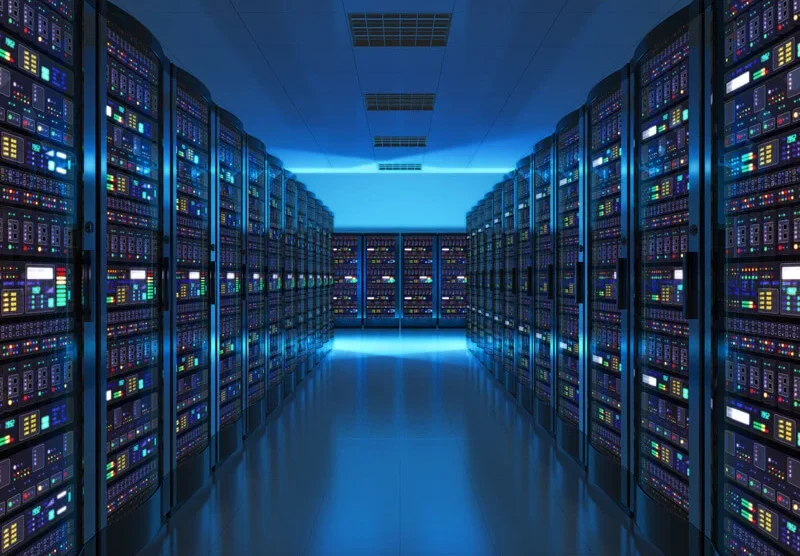

Businesses need IT infrastructure that can handle increasing workloads, scale seamlessly, and operate around the clock with minimal downtime. While many companies still maintain on-premises data rooms, a growing number are choosing colocation as their preferred solution. By housing their servers and networking equipment in a professionally managed third-party facility, businesses gain access to enterprise-grade infrastructure, advanced security, and reliable connectivity without the capital and operational burdens of running their own data center.
- Lower Capital Expenditure and Predictable Costs
One of the biggest advantages of colocation is cost efficiency. Building and maintaining a private data center involves massive upfront capital investment not only for the physical space but also for power systems, cooling infrastructure, fire suppression, and network connectivity. On top of that, businesses must handle ongoing operational costs like maintenance, staffing, and upgrades.
With colocation, companies simply lease space (from a single rack to a private cage) in a facility that already has all of this in place. Businesses can plan budgets more effectively, avoid costly downtime from equipment failures, and scale capacity as needs evolve.
- Enterprise-Grade Infrastructure and Redundancy
Colocation facilities are purpose-built for resilience. They feature redundant power feeds, backup generators, uninterruptible power supplies (UPS), precision cooling systems, and multiple network connections to ensure uptime even during failures or maintenance events.
For most businesses, achieving this level of redundancy in-house would be prohibitively expensive. Colocation providers invest heavily in infrastructure to meet stringent service level agreements (SLAs), often guaranteeing uptime of 99.99% or higher.
- Robust Physical and Digital Security
Data breaches and cyberattacks are top concerns for modern organizations. A reputable colocation facility offers multi-layered physical and logical security. This can include biometric access controls, mantraps, CCTV surveillance, on-site security personnel, and strict visitor policies.
In addition, many colocation data center providers offer managed firewall services, DDoS mitigation, and security monitoring. By colocating, businesses benefit from these advanced security measures without having to implement and manage them independently helping ensure both regulatory compliance and customer trust.
- Scalability and Flexibility
Business needs are rarely static. A sudden increase in customer demand, a new digital product launch, or entry into a new market can strain existing infrastructure. Colocation makes it easy to scale up (or down) quickly simply by adding or removing racks and increasing bandwidth as required.
This flexibility is particularly valuable for startups and fast-growing enterprises, where IT requirements can shift dramatically over short periods. It allows them to respond to changes without the long lead times and expenses associated with building new facilities or relocating infrastructure.
- Access to High-Performance Connectivity
Colocation facilities are typically carrier-neutral, meaning they provide direct access to multiple internet service providers and cloud platforms. This ensures businesses can choose the best combination of performance, cost, and redundancy for their needs.
Carrier diversity reduces the risk of downtime due to network failures and allows for faster data transfer speeds, which is especially important for organizations with heavy workloads, real-time applications, or globally distributed users.
- Focus on Core Business, Not Infrastructure
Maintaining an in-house data center requires dedicated staff for monitoring, troubleshooting, and upgrading systems. This diverts resources away from strategic business activities. By choosing colocation, IT teams can offload much of the infrastructure management to the provider and focus on delivering value through innovation, software development, and customer engagement.
- Compliance and Regulatory Readiness
In industries like finance, healthcare, and government, compliance with standards such as ISO 27001, PCI DSS, and HIPAA is essential. Many colocation facilities are already certified to meet these requirements, reducing the compliance burden for their clients.
By hosting infrastructure in a compliant facility, businesses can more easily demonstrate adherence to security and privacy regulations—an increasingly important consideration in a world of evolving data protection laws.
- Supporting Sustainability Goals
Modern colocation providers are also making significant strides toward sustainability. They use energy-efficient cooling technologies, renewable energy sources, and advanced monitoring to reduce power consumption and carbon footprint.
For organizations committed to ESG (Environmental, Social, and Governance) objectives, colocating in a green data center helps them meet environmental targets while benefiting from high-performance infrastructure.
Colocation in the Indian Market
The growth of the digital economy in India has made reliable, scalable infrastructure more important than ever. Demand for cloud services, AI workloads, OTT streaming, and e-commerce has skyrocketed—driving investment in state-of-the-art data center in India projects.
India’s colocation market has seen rapid expansion, with providers building facilities in strategic hubs like Mumbai, Chennai, Bengaluru, and Delhi NCR. These locations offer strong connectivity, access to major submarine cable landing stations, and proximity to enterprise customers. Businesses in India can leverage colocation to serve both domestic and international users efficiently, while complying with emerging data localization norms.
The Bottom Line
Colocation is more than just a cost-saving alternative to owning infrastructure it’s a strategic enabler. By colocating, organizations gain access to the kind of robust, secure, and scalable environment that would be difficult and costly to replicate in-house.
Whether it’s the financial predictability, the enterprise-grade infrastructure, the access to multiple carriers, or the ability to scale without disruption, the benefits are clear. For businesses operating in fast-moving markets especially those in India the right colocation data center can be the foundation for digital resilience, operational agility, and long-term growth.