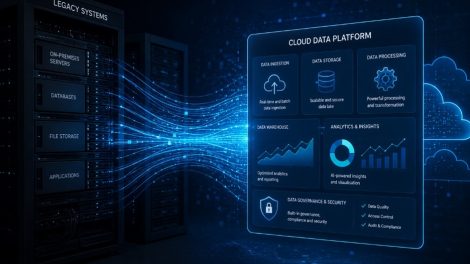


The physical office was once the primary organizing unit of professional labor. Rows of metal filing cabinets held institutional memory, conference tables served as the sole stage for high-stakes decision-making, and physical proximity dictated the speed of cross-departmental collaboration. Over the past two decades, this physical architecture has largely dissolved. In its place sits an expansive layer of digital infrastructure. Today, software is no longer a peripheral support tool used merely to draft correspondence or balance accounting ledgers; it has become the workplace itself.
Yet the relationship between software and organizational output is nuanced. Simply purchasing licenses for new applications does not automatically guarantee efficiency.
When implemented without structural discipline, digital tools can easily introduce fresh layers of administrative friction. But when deployed with clear operational intent, software functions as a powerful force multiplier, reorganizing how companies manage their most finite asset: focused human attention. By automating mechanical friction, establishing transparent repositories of institutional knowledge, and decoupling collaboration from real-time physical constraints, modern software platforms fundamentally redefine the baseline of workplace productivity.
Eliminating Cognitive Drag Through Workflow Automation
In nearly every knowledge-based enterprise, skilled professionals lose dozens of hours each month to what systems engineers call administrative friction. These are the routine, predictable tasks that demand manual labor but require virtually zero creative problem-solving: re-keying customer information from emails into sales ledgers, generating repetitive weekly progress reports, chasing down missing sign-offs on purchase orders, or manually routing support tickets.
When employees spend half their shifts operating as human bridges between disconnected systems, cognitive fatigue sets in. High-leverage workers end up mentally depleted before they ever apply their intellect to strategic, revenue-generating initiatives.
Modern workplace software systematically dismantles these manual bottlenecks through trigger-based automation. Application programming interfaces (APIs) and integrated workflow engines allow disparate business tools to communicate autonomously behind the scenes.
When a prospective client signs a digital contract, modern software can instantly generate an invoice, provision user credentials, notify the onboarding specialist, and establish an internal project workspace—all within seconds. Reclaiming these fragmented hours protects employee bandwidth and eliminates the human transcription errors that inevitably plague manual data entry.
Unifying Fragmented Knowledge into a Single Source of Truth
One of the quietest, most persistent drains on workplace momentum is information retrieval. In poorly integrated work environments, vital institutional context is scattered across private inboxes, ephemeral chat channels, and outdated local desktop files. When team members cannot locate critical documentation, progress halts, leading to redundant work and conflicting operational decisions.
Productivity software resolves this operational fragmentation by establishing a centralized, searchable single source of truth:
-
Living Documentation: Collaborative document hubs allow teams to build and update standard operating procedures, technical guides, and project briefs in real time, preventing critical institutional knowledge from vanishing when key personnel depart.
-
Contextual Access: Enterprise search capabilities powered by natural language processing allow employees to retrieve contracts, client histories, and meeting notes instantaneously without interrupting colleagues.
-
Version Control and Transparency: Real-time multi-user editing eliminates the confusion of circulating conflicting file versions via email attachments, ensuring every stakeholder references the exact same dataset.
Democratizing internal information creates genuine operational autonomy. When staff can reliably find the answers they need without waiting for managerial clearance, project turnaround times accelerate dramatically.
Supporting Asynchronous Collaboration and Protecting Deep Focus
The early phase of digital transformation frequently prioritized constant, real-time connectivity. Organizations adopted messaging platforms that pinged employees continuously, creating a false equivalence between immediate responsiveness and meaningful productivity. In practice, persistent interruptions shatter deep cognitive focus, trapping workers in an exhausting, reactive loop of answering notifications.
Mature organizations leverage modern project management software to transition toward an asynchronous work baseline:
Rather than relying on endless status update meetings, teams track progress through centralized task boards, shared roadmaps, and automated milestone trackers. Project velocity is visible at a glance, allowing team members to review updates, add feedback, and advance deliverables on their own schedules.
By shifting non-urgent discussions into organized, searchable project threads, software provides workers with extended blocks of uninterrupted time. This dedicated focus is essential for conducting deep technical analysis, writing complex code, or developing nuanced business strategies—the high-value work that actually moves an organization forward.
Countering Tool Sprawl with Strategic Platform Consolidation
While software holds transformative potential, unmanaged adoption introduces its own pathology: application proliferation. When individual teams purchase specialized tools without cross-departmental oversight, employees find themselves juggling ten different browser tabs, managing dozens of logins, and context-switching dozens of times an hour.
Maximizing productivity requires disciplined software governance. The goal is not to accumulate tools, but to curate an integrated ecosystem.
Modern enterprise software suites increasingly emphasize modular consolidation, combining communication, task tracking, file repositories, and resource planning into unified interfaces. When a company simplifies its digital toolkit, cognitive overhead drops, licensing expenses normalize, and cross-functional teams collaborate with far less friction.
Transforming Intuition into Data-Driven Execution
Historically, operational adjustments were largely reactive, dictated by subjective impressions, gut instincts, or backward-looking quarterly reviews. Managers guessed which projects were stalling and struggled to assess team capacity accurately.
Modern business platforms embed real-time telemetry into daily workflows, turning subjective assumptions into actionable intelligence. Project management tools visualize operational bottlenecks, resource management platforms track team bandwidth to prevent burnout, and customer relationship platforms identify friction points in sales cycles. Armed with real-time operational metrics, leadership can reallocate resources dynamically, solve emerging bottlenecks proactively, and make informed strategic bets with confidence.
Ultimately, software is an amplifier of organizational design. If an underlying business process is chaotic and poorly defined, digitizing it will simply accelerate that dysfunction. Conversely, when guided by clear operational strategy and an unwavering respect for human attention, software becomes the foundational backbone of the modern enterprise. By removing administrative burdens, centralizing critical knowledge, and enabling focused, asynchronous momentum, the right digital infrastructure empowers employees to focus on what humans do best: innovate, collaborate, and solve complex problems.