
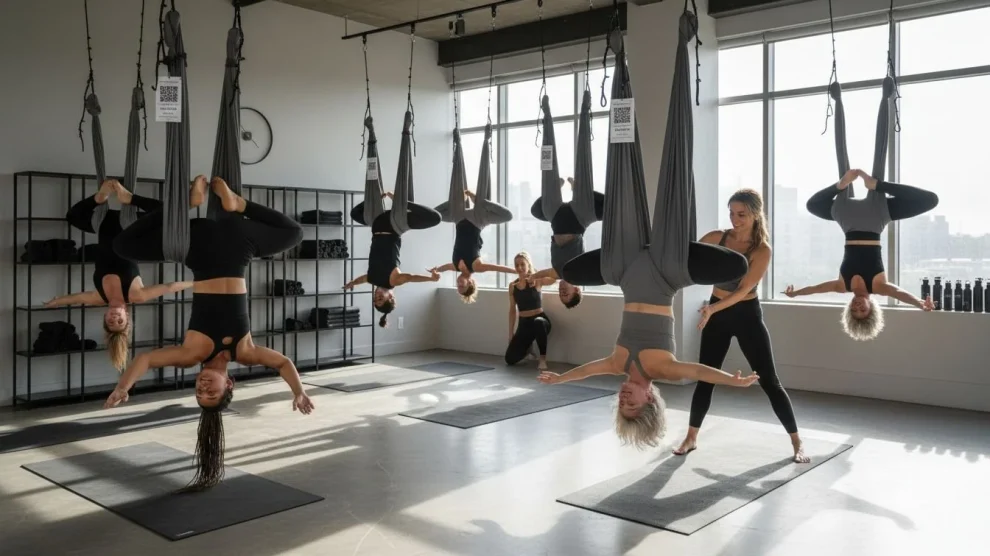

Technology is no longer limited to high performance sports or endurance training. In recent years, smart tools and wearable devices have quietly entered the wellness space, helping people understand how their bodies move, recover, and respond to stress. For practitioners in Singapore, where workdays are long and recovery time is often limited, technology can add a practical layer of insight to aerial yoga without turning practice into a numbers driven workout.
When used thoughtfully, tech does not replace body awareness. Instead, it supports it by highlighting patterns in movement quality, fatigue, grip endurance, and recovery that may otherwise go unnoticed.
Why aerial yoga benefits from tech assisted awareness
Aerial yoga involves suspension, grip strength, balance, and nervous system regulation. These elements place subtle but measurable demands on the body. Unlike running or weight training, progress in aerial yoga is often felt rather than counted, which makes objective feedback useful when applied gently.
Technology can help aerial yoga practitioners:
-
Track recovery and readiness
-
Understand fatigue patterns
-
Improve grip endurance safely
-
Balance effort and rest
-
Support long term consistency
The goal is awareness, not optimisation at all costs.
Wearables and nervous system feedback
Many modern wearables track heart rate variability, resting heart rate, and sleep patterns. These metrics offer indirect insight into nervous system balance, which plays a major role in aerial yoga comfort and performance.
Heart rate variability, in particular, reflects how well the body shifts between effort and relaxation. Aerial yoga often improves this balance over time, especially when combined with mindful breathing and supported inversions.
Wearables can help practitioners notice:
-
How aerial yoga affects sleep quality
-
Whether recovery improves on practice days
-
Signs of accumulated stress or fatigue
-
The impact of late evening classes on rest
This information supports smarter scheduling rather than pushing through exhaustion.
Using sleep data to guide practice intensity
Sleep is one of the clearest indicators of recovery. Poor sleep often leads to reduced grip strength, slower reactions, and reduced tolerance for inversion.
By observing sleep trends, practitioners can:
-
Choose gentler sessions after short sleep
-
Focus on restorative poses when needed
-
Avoid overloading the body during stressful weeks
-
Build consistency without burnout
This approach aligns aerial yoga with real life demands rather than ideal schedules.
Grip awareness and load management
Grip fatigue is common in aerial yoga, especially for newer practitioners. While most studios do not use specialised grip sensors, wearable data can still offer clues.
Signs of grip overload include:
-
Elevated heart rate during simple transitions
-
Rapid fatigue early in class
-
Reduced control in later poses
By correlating perceived effort with wearable feedback, practitioners can learn when to rest, adjust grip technique, or modify poses before strain develops.
Recovery tracking beyond soreness
Aerial yoga soreness often feels different from traditional exercise soreness. It may show up as deep tissue fatigue, forearm tightness, or subtle joint sensitivity rather than sharp muscle pain.
Technology helps identify recovery needs by tracking:
-
Morning resting heart rate changes
-
Sleep disturbances after intense sessions
-
Day to day energy fluctuations
-
Stress load from work and lifestyle
These signals guide recovery choices such as rest days, hydration focus, or restorative classes.
Breath awareness and pacing
Some wearables now offer guided breathing features and stress tracking based on physiological signals. These tools complement aerial yoga by reinforcing breath awareness outside the studio.
Practitioners can use tech to:
-
Practise slow breathing on non class days
-
Reduce pre class stress levels
-
Reinforce parasympathetic activation
-
Improve focus before inversions
Over time, this strengthens the mind body connection rather than distracting from it.
Avoiding tech overload in yoga practice
While technology offers benefits, too much data can pull attention away from internal awareness. The key is selective use rather than constant monitoring.
Helpful boundaries include:
-
Reviewing data after practice, not during
-
Focusing on trends rather than daily fluctuations
-
Ignoring metrics that increase anxiety
-
Using tech as a reflection tool, not a judge
Aerial yoga remains a sensory practice first, with tech serving a supportive role.
Tech and injury prevention
Overuse injuries often develop quietly through accumulated fatigue rather than sudden trauma. Wearable data can highlight early warning signs before discomfort becomes persistent.
Warning patterns may include:
-
Consistently elevated resting heart rate
-
Declining sleep quality
-
Reduced heart rate variability
-
Lingering fatigue across several days
Responding early with rest or lighter practice protects long term progress.
Integrating tech insights with instructor guidance
Technology offers data, but instructors provide context. Sharing general feedback such as fatigue levels or recovery status helps teachers suggest appropriate modifications.
In well structured classes, this collaboration allows:
-
Better pose selection
-
Smarter use of inversions
-
Balanced strength and rest
-
Safer progression over time
This integration respects both science and lived experience.
Building a sustainable aerial yoga routine
The true value of tech lies in sustainability. Rather than pushing harder, it encourages smarter choices that keep practice enjoyable and consistent.
Long term benefits include:
-
Reduced risk of burnout
-
Better recovery habits
-
Increased self awareness
-
More confidence in listening to the body
When used wisely, tech becomes a quiet ally rather than a distraction.
Practising with awareness in a supportive environment
Technology works best when combined with thoughtful instruction and a calm studio setting. Aerial yoga is as much about nervous system balance as physical skill.
At Yoga Edition, classes are designed to encourage self awareness, rest, and intelligent progression. This approach aligns naturally with tech assisted insights, helping practitioners use data as guidance rather than pressure.
Real-life FAQs
Q: Do I need a smartwatch to practise aerial yoga effectively?
A: No. Wearables are optional tools that add insight but are not required for progress or enjoyment.
Q: Can wearables help reduce anxiety during aerial yoga?
A: Yes. Breathing and stress features can support relaxation outside class, which carries into practice.
Q: Should I monitor heart rate during aerial yoga sessions?
A: It is better to review data after class. Monitoring during practice may distract from body awareness.
Q: Can tech help prevent grip injuries in aerial yoga?
A: Indirectly, yes. Fatigue and recovery data can highlight when rest or modification is needed.
Q: How often should I check my wearable data if I practise regularly?
A: Weekly trend reviews are usually more useful than daily analysis.
Q: Does tracking sleep really matter for aerial yoga?
A: Yes. Sleep quality strongly affects strength, balance, and nervous system regulation during practice.
By blending technology with mindful movement, aerial yoga practitioners can build a practice that is informed, responsive, and sustainable without losing the intuitive essence that makes yoga meaningful.